Last updated on April 15, 2026
By: Ella Coleman
Copy Editor
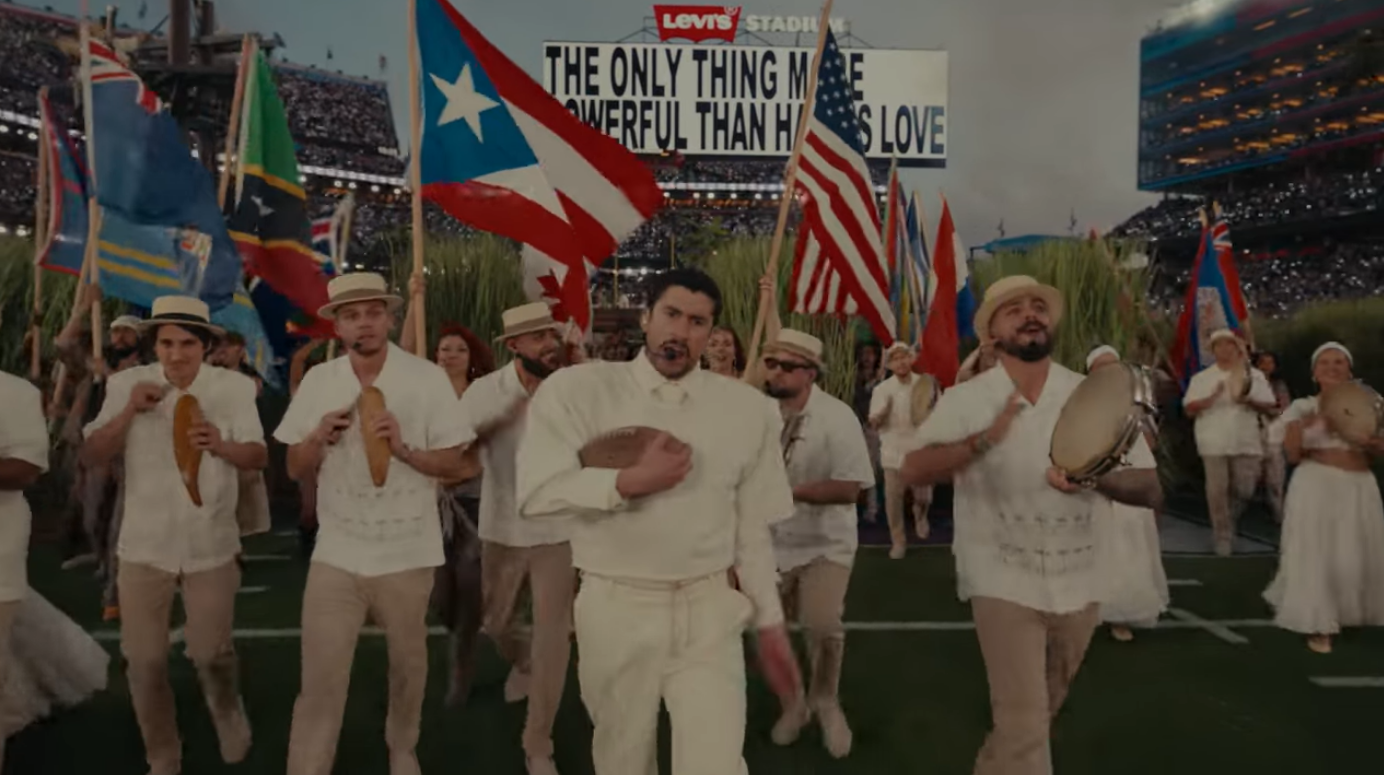
Bad Bunny delivered a powerful halftime show during the Super Bowl that celebrated unity and culture, and paid tribute to the beauty and history of his homeland, Puerto Rico. It’s no surprise that his show was one of the most watched Super Bowl halftime shows in history. From the white clothes he wore to the neighborhood displaying Latino culture, his performance was full of symbolism and hidden messages.
The performance began in a sugarcane field, with workers farming the sugarcane as Bad Bunny walked by. Sugarcane is a significant part of Puerto Rico’s history, dating all the way back to the 1500s when Spanish colonizers imported it and then forced the Indigenous people of what we now call Puerto Rico into unpaid labor to plant and harvest the sugarcane. The colonizers also brought enslaved Africans over to farm these crops, and this continued up until slavery was outlawed in Puerto Rico in 1873. After Puerto Rico became a US territory in 1898, sugarcane quickly became its main cash crop, with US sugar companies acquiring vast amounts of land and profiting from the citizens’ labor.
Puerto Rico’s farmers are known as jíbaros, and they are self-subsisting, meaning they grow enough crops to meet the needs of their families, with traditional jíbaros selling their crops in nearby towns as well. Jíbaros’ traditional clothing consists of long-sleeved white shirts, white pants, and hats. Both Bad Bunny and the farmers in the halftime show wore all white clothes, paying homage to Puerto Rico’s jíbaros. Bad Bunny’s custom white football jersey had the name “Ocasio” on the back: his mother’s last name.
As the performance continued, many different scenes took place: a vendor at a coco frío stand selling fresh coconut water; a group of older men playing dominoes, a beloved pastime in Puerto Rico; young women getting their nails done at a nail salon; people boxing on stage, a major sport in Puerto Rico; a piragua stand, a staple in Puerto Rican culture where Bad Bunny was served the delicious shaved ice treat before continuing on.
One thing that fans were excited to see during the halftime show was La Casita (“little house”), a replication of a traditional Puerto Rican home Bad Bunny used during his “No Me Quiero Ir De Aquí” residency, as well as featured in his short film Debí Tirar Más Fotos. Onstage, many familiar faces were seen dancing at the casita, such as Pedro Pascal, Cardi B, Young Miko, Jessica Alba, and Karol G.
In addition to the vibrant and lively neighborhood the stadium transformed into, the wedding that took place during the halftime show was, in fact, real. The couple had originally invited Bad Bunny to their wedding, but he proposed a better idea—he invited them to get married during his halftime show. Variety confirmed that he did serve as their witness and signed their marriage license. The couple then cut their wedding cake during Bad Bunny’s song “Baile Inolvidable.” Rolling Stone did some research on the history behind the set during this portion of the show: there was a replication of Castillo San Felipe del Morro, also known as El Morro, a 16th-century Spanish fort that borders the coast in San Juan, Puerto Rico. This fort is known as a national symbol of Puerto Rico.
After the wedding and Lady Gaga’s appearance, Bad Bunny commenced his song “Nuevayol,” a song appreciating Nuyorican culture. The term Nuyorican refers to someone of Puerto Rican descent who was raised in New York. A barber shop and a bodega stood behind him, an integral part of New York culture. The owner of the Caribbean Social Club in Brooklyn, Toñita, made an appearance as well, serving him a drink. The Caribbean Social Club has been open for 50 years, and she’s refused to sell the property despite gentrification in the area.
A heartwarming moment included in the halftime show was when a young boy with a resemblance to Bad Bunny sat in front of a TV, watching Bad Bunny’s Grammy’s acceptance speech. Bad Bunny then handed the young boy, 5-year-old actor Lincoln Fox, a Grammy award, symbolizing that anyone can achieve their dreams.
As Bad Bunny sang his song “El Apagón” (the blackout), the sugarcane workers from the beginning of the show were hanging on electrical poles, where he climbed up while performing. This portion of the show highlighted Puerto Rico’s struggles with its electrical power and power grids, and the song is a statement about the failing infrastructure due to aging and natural disasters, especially Hurricane Maria. With the sparking and exploding from the electrical poles, Bad Bunny’s protest didn’t go unnoticed. During this song, he also held up the Puerto Rican flag, except the dark blue was replaced with a light blue, which is associated with Puerto Rico’s independence movement.
The independence movement began under Spanish colonial rule and has lasted through the Spanish-American war in 1898 when the US took control. The Puerto Rican Independence Party advocates for peaceful strategies, pushing towards becoming a sovereign state, self-governance, and international recognition.
Bad Bunny’s final moments of the show were spent encouraging unity and togetherness: flags were raised from every country in the Americas, and he listed each country by name, finishing off with his homeland, Puerto Rico. He held up a football to the camera, which read, “Together We Are America,” and spiked it.
Just a week before the Super Bowl, during Bad Bunny’s Album of the Year acceptance speech at the Grammys, he made an important statement while calling out ICE: “The only thing more powerful than hate is love.” The message was displayed on a billboard during his halftime show at the very end of his performance as he walked off the stage.
If you see any or are approached by law enforcement or ICE agents on Vol State’s campus, take them to the Campus Police Department, where they will verify any warrants or reason for being on campus.

Be First to Comment